First-aid kit
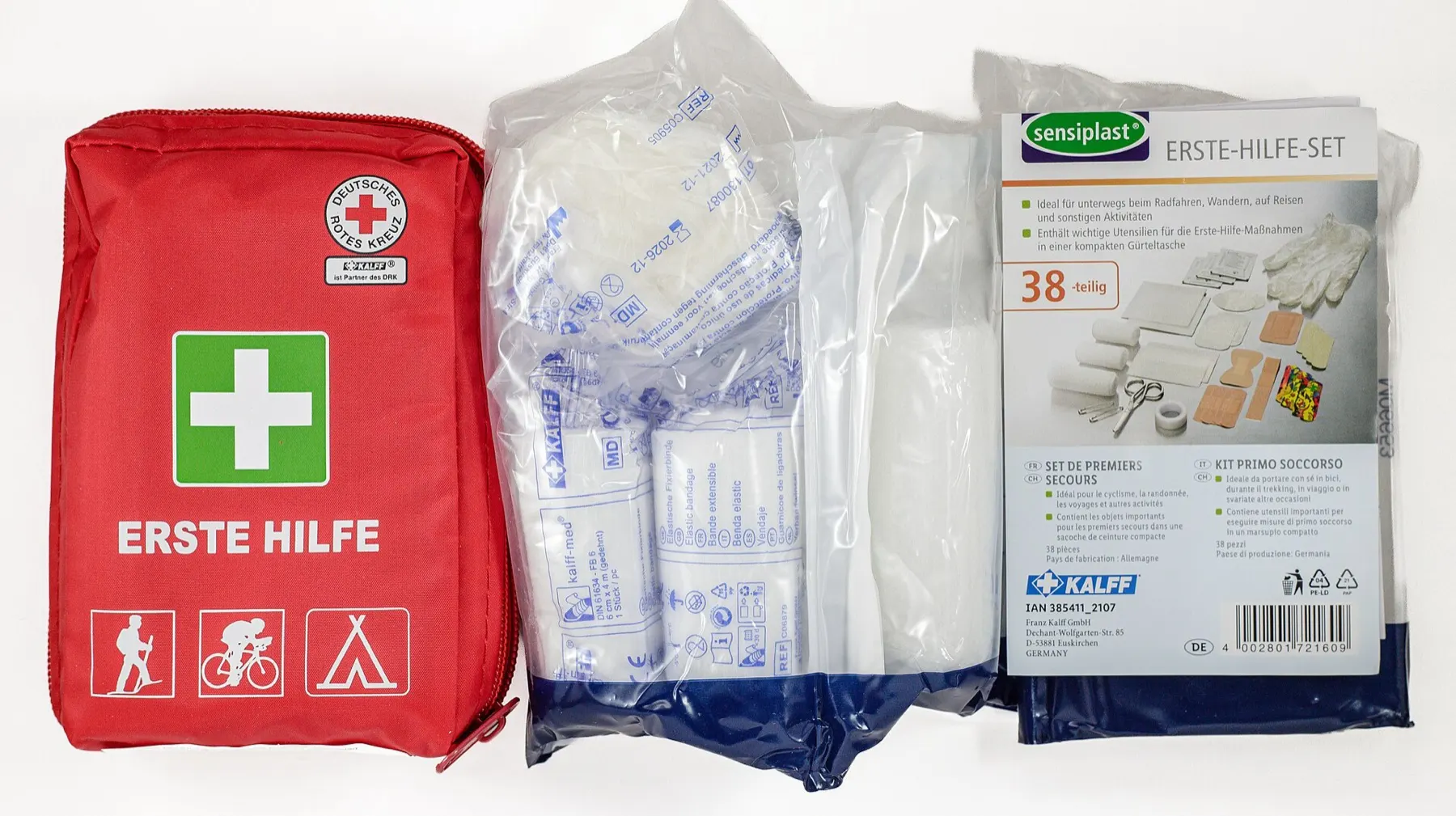
A compact kit for treating wounds, burns and sprains until professional help arrives.
- Contents
- Sterile dressings, compression bandage, plasters, gauze, tape, triangular bandage
- Also included
- Disposable gloves, trauma shears, wound-cleaning wipes, CPR face shield
- Case
- Water-resistant pouch with labelled compartments
- Standard
- Contents based on common European car/workplace first-aid kits
- Shelf life
- Sterile items usually last about 5 years. Check the dates on each item once a year.
Friedrich Haag, CC BY-SA 4.0 · Photo credits
Pending expert reviewThis page contains medical or safety instructions that are being checked by an expert. Follow official instructions and get hands-on training.
Most injuries in a crisis are ordinary ones: cuts from broken glass, burns, sprains and falls. When ambulances are slow or busy, what you do in the first minutes matters.
This kit holds the basics for those first minutes. Dressings and bandages cover wounds and stop bleeding with pressure. Gloves and wipes keep wounds cleaner. Shears let you cut clothing away quickly.
The items are sorted into labelled compartments so you can find what you need, even in poor light and under stress.
Why it’s in the kit
During a war or a large disaster, hospitals and rescue services can be overwhelmed. Being able to treat small injuries yourself, and to keep a seriously injured person stable until help arrives, takes pressure off them and can save a life.
Storage & maintenance
Keep the kit dry and at room temperature. Once a year, check expiry dates and replace anything used, opened or out of date. Gloves become brittle over time, so replace them too. After each use, refill the kit straight away.
How to use it
Make sure it's safe
Before you help, check for danger to yourself, such as traffic, fire or falling debris. Don't become a second casualty.
Call for help
Call 112 or ask someone else to call. Say where you are, what happened and how many people are hurt.
Put on gloves
Wear the disposable gloves to protect you and the injured person from infection.
Stop heavy bleeding first
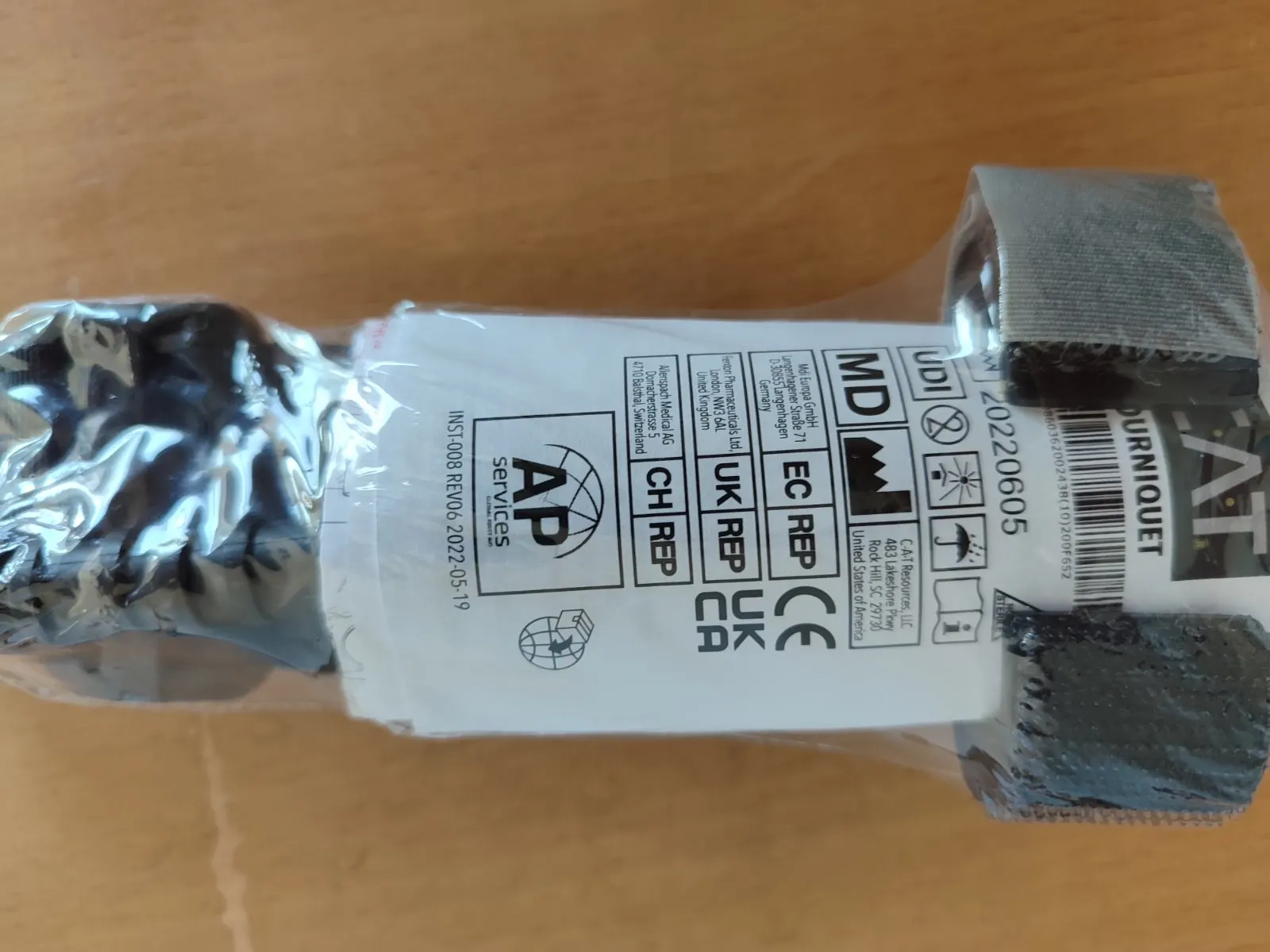
Press firmly on the wound with a dressing and keep pressing. For life-threatening bleeding from an arm or leg, use the tourniquet.
Cover and protect
Cover wounds with a sterile dressing and bandage. Cool burns under cool running water for at least 20 minutes, then cover loosely.
Keep them warm and watch
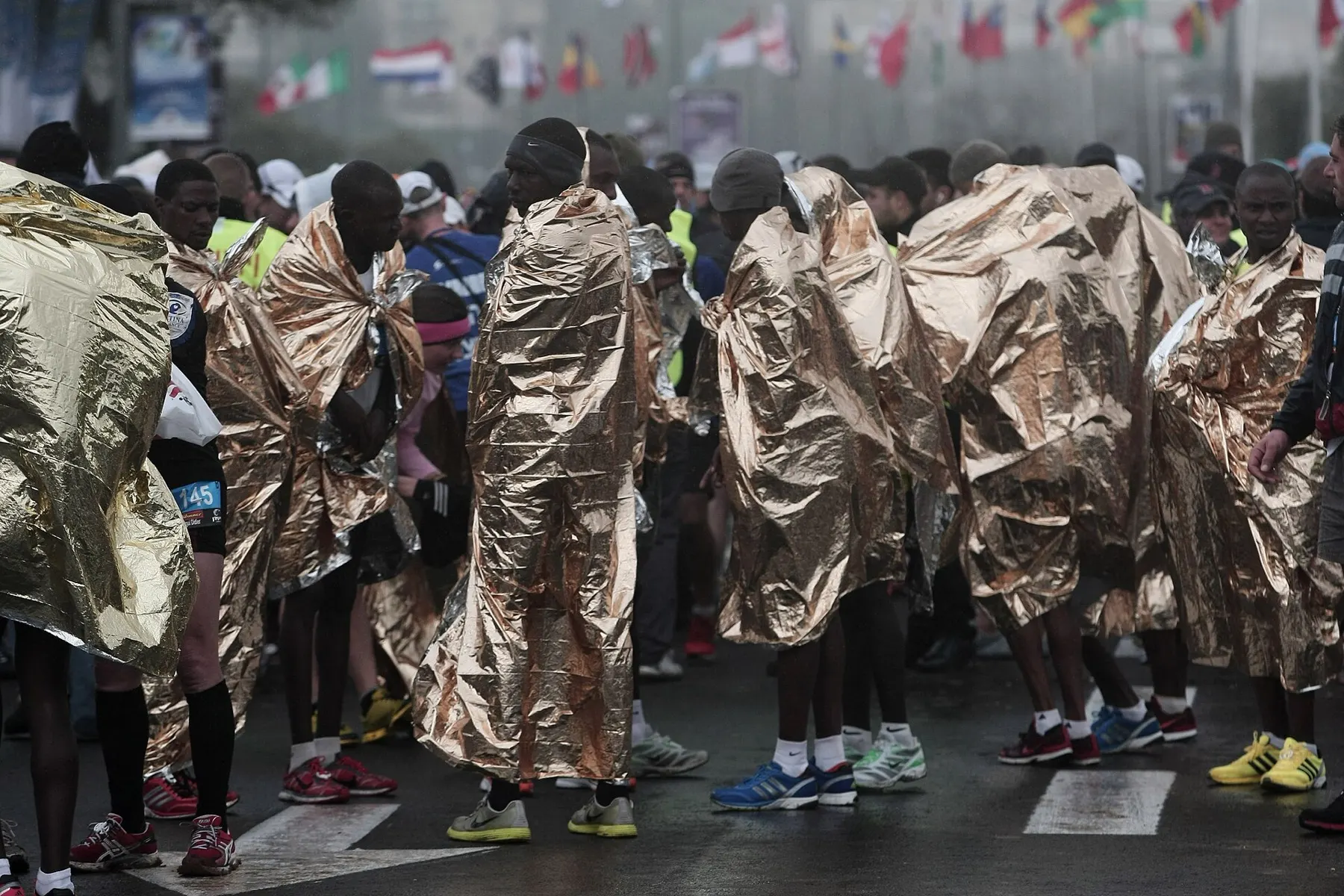
Cover the person with the thermal blanket, reassure them and stay with them until help arrives.
Video guides
Video guides are being prepared.
Manuals & downloads
Manuals will be available here soon.