Tourniquet
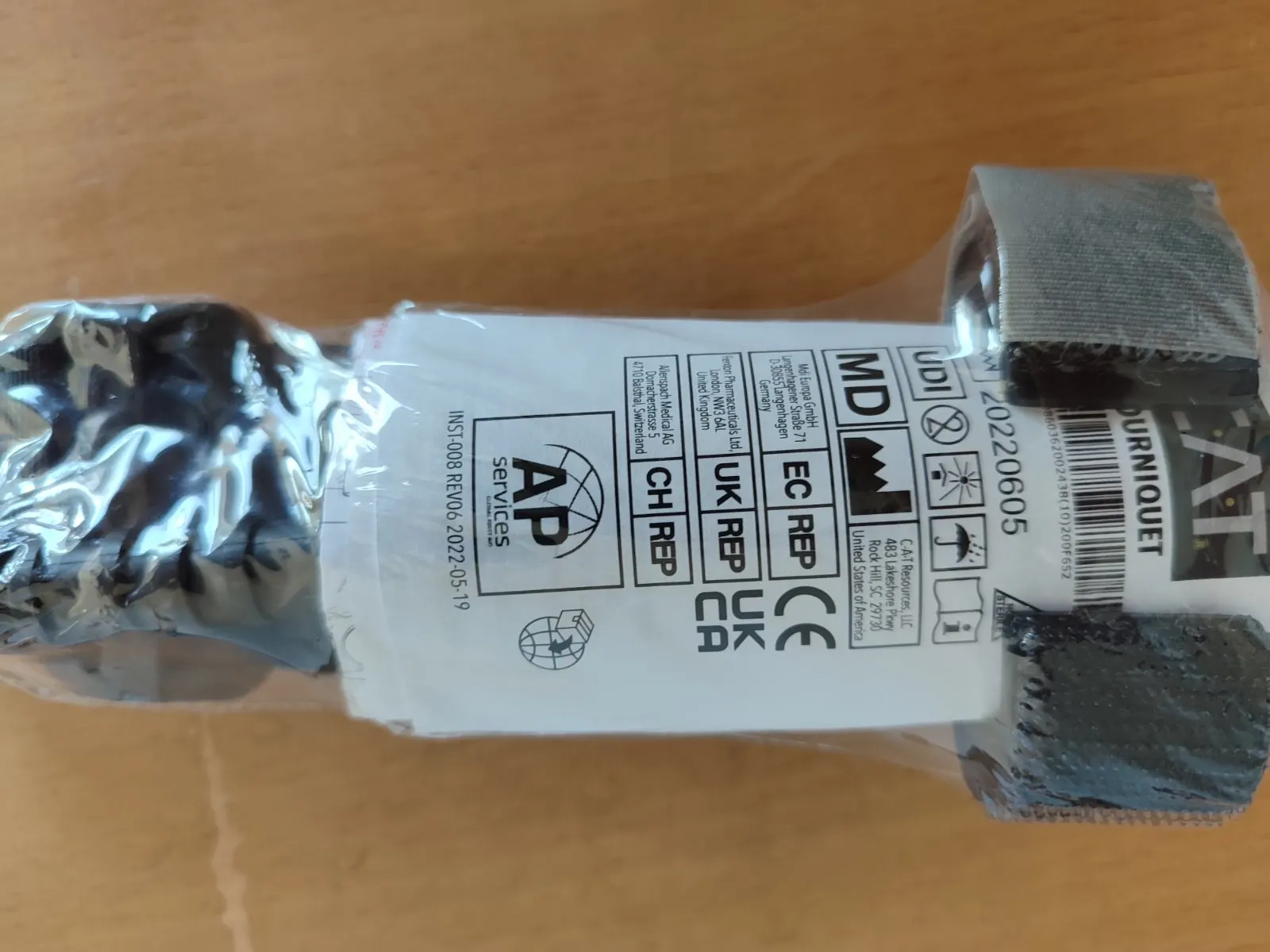
A windlass tourniquet that stops life-threatening bleeding from an arm or leg.
- Type
- Windlass tourniquet with self-adhering strap and locking clip
- Use
- Arms and legs only
- Application
- Can be applied with one hand, including on yourself
- Extras
- Space to write the time it was applied
- Shelf life
- Several years when stored in its packet. Replace it after any real use and if the strap or windlass looks damaged.
Svitlana333, CC BY-SA 4.0 · Photo credits
Pending expert reviewThis page contains medical or safety instructions that are being checked by an expert. Follow official instructions and get hands-on training.
A person can bleed to death from a serious arm or leg wound within minutes, often before an ambulance arrives. A tourniquet stops that bleeding by squeezing the limb so hard that blood can’t get through.
This is a windlass tourniquet. You pull a strap around the limb, then twist a rod to tighten it further. A clip holds the rod so it can’t unwind. You can apply it with one hand, even on yourself.
Bleeding-control programmes such as Stop the Bleed teach the same simple rule: if bleeding from a limb is heavy and won’t stop with pressure, use a tourniquet, high and tight.
Why it’s in the kit
In war, injuries from blasts, shrapnel and broken glass are common. A tourniquet is one of the few items that can directly save a life in the first minutes. It only works if it is at hand and you know how to use it.
Storage & maintenance
Keep it in its packet, pre-folded and ready to open. Don’t leave it in direct sun or extreme heat for long periods. Check it once a year for cracks or fraying. A hands-on course will give you the confidence to use it under stress.
How to use it
Call 112
Call 112 or ask someone else to call while you act. Say there is severe bleeding.
Place it high and tight
Put the strap around the limb about 5–7 cm above the wound, between the wound and the heart. Never place it over a joint, such as the knee or elbow. If unsure where the wound is, place it as high on the limb as you can.
Pull the strap tight
Pull the strap as tight as you can and fasten it. You should not be able to slide more than a fingertip under it.
Twist until bleeding stops
Turn the windlass rod until the bleeding stops. This hurts. That is normal and expected.
Lock it and note the time
Lock the rod in the clip. Write the time on the tourniquet or on the person's forehead.
Never loosen it
Do not loosen or remove the tourniquet. Leave that to medical staff. Stay with the person and keep them warm.
Video guides
Video guides are being prepared.
Manuals & downloads
Manuals will be available here soon.