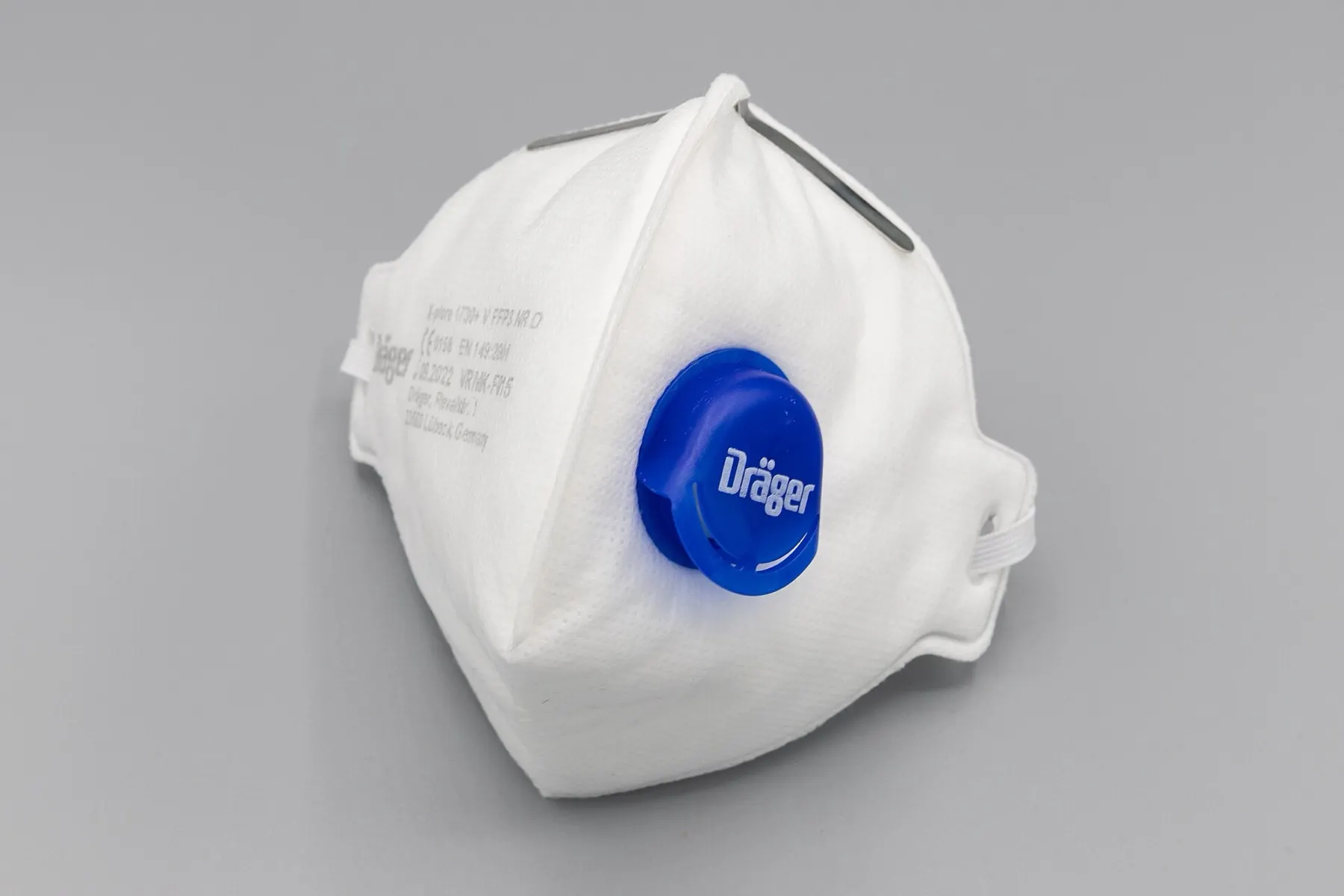
FFP3 respirator mask
A close-fitting mask that filters fine dust, smoke particles and radioactive dust. Not gases.
- Protection class
- FFP3 (EN 149)
- Filtration
- At least 99% of airborne particles (lab test)
- Valve
- Exhalation valve for easier breathing (common design)
- Pack
- Several masks, individually wrapped
- Shelf life
- Typically 3–5 years sealed. Check the date on the packet. Single use; replace when dirty, damp or hard to breathe through.
dronepicr, CC BY 2.0 · Photo credits
Explosions, fires and collapsed buildings fill the air with dust, ash and fine particles. After a nuclear incident, the air may also carry radioactive dust. This mask helps keep those particles out of your lungs.
FFP3 is the highest class of disposable particle mask in Europe under the EN 149 standard. It is tested to filter at least 99% of particles from the air. That only works when it fits tightly, so take a moment to get the seal right.
Be clear about what it can’t do. It does not filter gases such as chlorine, ammonia or carbon monoxide, or chemical warfare agents. For those you would need a full gas mask with the right filter, plus training. If there is a gas or chemical warning, follow the authorities’ instructions on where to shelter.
Why it’s in the kit
You may need to walk through dusty rubble, clean up after damage or travel during a fallout warning. A good particle mask makes all of these safer, and it costs little and weighs almost nothing.
Storage & maintenance
Keep masks sealed in their packets, dry and out of the sun. Don’t fold or crush them. A mask is single use: once it is wet, dirty, damaged or hard to breathe through, replace it.
How to use it
Clean hands
Wash or wipe your hands before you touch the mask.
Shape the nose clip
Bend the metal strip into a soft curve. Hold the mask in your palm with the straps hanging down.
Put it on
Place the mask over your nose and chin. Pull the lower strap behind your neck and the upper strap over the top of your head.
Press the nose clip
Use both hands to press the metal strip around your nose. Don't pinch it with one hand.
Check the seal
Cover the mask with your hands and breathe out sharply. If air leaks at the edges, adjust the nose clip and straps.
Take it off safely
Remove it by the straps without touching the front. Throw it away and wash your hands.
Video guides
Video guides are being prepared.
Manuals & downloads
Manuals will be available here soon.